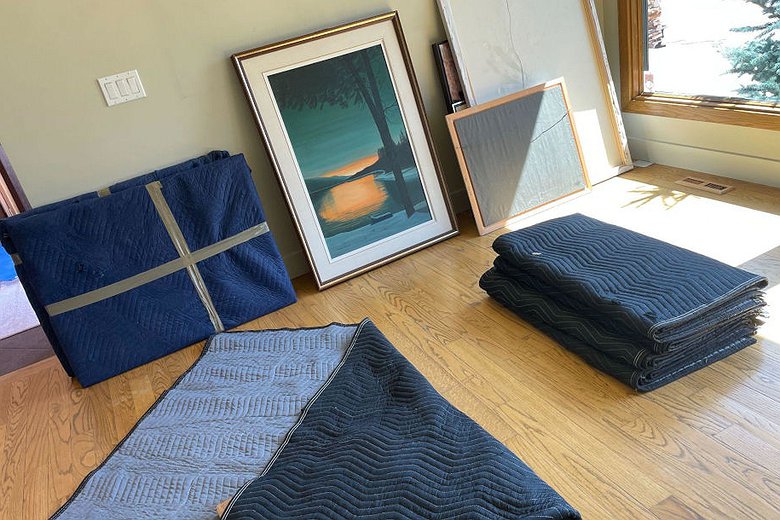
Moving insurance in Calgary is three separate layers, and most people only know about one of them. The mover's basic liability pays by weight, not by value. Your home, condo or tenant policy may cover your belongings in transit, but only for the events it already covers. Replacement value protection, bought from the mover, is the layer that pays for what the item is worth.
Explore further
The numbers explain why it matters. Basic mover liability is generally 60 cents a pound per item. A 50-pound television that cost $1,500 settles near $30 on that basis. A typical home policy does not pay for scratches, dents or broken fragile items either, even at home. That leaves a gap exactly where most moving damage happens.
This guide explains what each layer pays, where the gaps sit, and which questions to ask before you sign. For the price side of a Calgary move, see our breakdown of how much movers cost in Calgary .
Key Takeaways
- Basic mover liability is generally $0.60 per pound per item, or $1.32 per kilogram, unless you buy replacement value protection. It is based on weight, not on value.
- A home policy may cover belongings in transit for insured events such as fire or theft. TD Insurance, for example, extends this for up to 45 consecutive days within Canada when the new home is also insured with TD.
- The same insurer excludes scratches, dents and fragile breakage from that coverage. That is the gap most moving damage falls into.
- Replacement value protection pays based on what an item is worth, under the terms the mover sets. Deductibles, declared values and exclusions differ between companies.
- Goods you pack yourself are generally outside the mover's liability. High-value items need to be declared before they are loaded.
- Items in storage may need separate coverage from your insurer. Ask before the goods leave the truck.
- A condo building may ask your mover for a certificate of insurance. That is the mover's policy, not yours.
What does a mover's basic liability actually pay?
Basic liability is the coverage that comes with every professional move at no extra charge. The Office of Consumer Affairs says that if you do not buy replacement value protection, mover liability is generally $0.60 per pound per item , which is $1.32 per kilogram. The payout follows the scale, not the receipt.
That works reasonably for heavy items that are cheap per pound and poorly for light items that are expensive per pound. A solid wood dresser and a flat-screen television can carry the same price tag and settle for very different amounts. Electronics, art, lamps and anything with glass are where basic liability falls furthest short.
Basic liability payouts at $0.60 per pound
| Example item | Example weight | Basic liability payout |
|---|---|---|
| Flat-screen television | 50 lb | $30 |
| Upholstered armchair | 60 lb | $36 |
| Solid wood dresser | 100 lb | $60 |
| Dining table | 250 lb | $150 |
| Upright piano | 400 lb | $240 |
The weights above are examples for the arithmetic, not measurements of your furniture. Multiply the real weight of any piece by $0.60 and compare it with what it would cost to repair or replace. If the gap is large, basic liability is not the coverage you want for that item. Our guide on the cost to move a piano in Calgary covers how heavy instruments are handled and quoted.
Does home insurance cover your belongings during a move?
Sometimes, and only for what the policy already covers. TD Insurance states that its home policy continues to cover belongings in transit for up to 45 consecutive days on moves within Canada, as long as the new home is also insured with TD. That coverage applies to the events the policy covers, such as fire or theft.
The same insurer is clear about the limit. Scratches, dents and breakage of fragile items are excluded during the move, because they are excluded at home too. A dropped television may be covered under that kind of policy. A scratched dining table or a cracked porcelain figurine usually is not. Other insurers set their own terms, so the only reliable answer is your own policy wording.
People also search
Two more changes are easy to miss. Moving from a rental to a condo you own usually means switching from tenant insurance to a condo policy, and moving from a condo to a house means a homeowner policy. Property placed in storage may also need its own coverage, which is why moving and storage insurance are worth checking together. TD, for example, offers a separate Property in Storage coverage for a named storage location. Call your insurer before the move, not after the claim.
What is replacement value protection and when is it worth buying?
Replacement value protection is optional coverage sold by the mover. Instead of paying by weight, it pays to repair or replace a damaged item based on its value, under the terms written into the contract. It costs more than basic liability, and it is the layer designed for the damage home policies exclude.
The terms decide what it is worth. Ask for the deductible, how the declared value of the shipment is set, whether there is a per-item maximum, what is excluded, and how long you have to report damage. Two companies can both say they offer replacement value and mean very different products.
When you compare quotes, including ours, ask each company to name the coverage included by default and the price of any upgrade for your inventory, in writing. The cheapest quote with basic liability and a slightly higher quote with replacement value are not the same product.
Where each layer of coverage applies
| Type of loss | Mover basic liability | Home policy (TD example) | Replacement value protection |
|---|---|---|---|
| Fire or theft while goods are in transit | Weight-based payout | Covered as an insured peril, within the 45-day transit window | Depends on the mover's terms |
| Scratch or dent on furniture | Weight-based payout | Excluded | Designed for this, subject to terms |
| Broken fragile item packed by the crew | Weight-based payout | Excluded | Designed for this, subject to terms |
| Broken item in a box you packed | Generally not the mover's liability | Excluded if fragile | Often excluded, ask |
| Belongings in storage | Ask the mover | May need added storage coverage | Ask the mover |
The table uses one insurer's published terms as the example in the home policy column. Your insurer may cover more or less. The pattern is still the useful part: home insurance tends to cover events, and replacement value protection is built for handling damage.
What will no policy cover?
Some losses fall outside every layer. The Office of Consumer Affairs notes that goods you pack yourself are generally outside the mover's liability. Items of extraordinary value, such as art, need to be declared, or the mover is not responsible for carrying them at that value. A box of heirlooms that was never listed on the inventory is the hardest claim to make.
Cash, jewellery, documents and small valuables are better carried in your own vehicle. Our tips on keeping valuables safe during a move cover what to set aside. Pianos, antiques, safes and large electronics belong on the quote by name, not discovered on moving day. Specialty item moving is priced for that handling, and our guide to specialty moving explains how those pieces are packed.
What do Calgary condo buildings ask for?
Some condo towers in the Beltline, East Village and downtown ask the moving company for a certificate of insurance before they confirm an elevator booking. That certificate shows the mover's own liability coverage for the building. It does not insure your belongings, and it does not replace your condo or tenant policy.
Ask your property manager for the building's move rules in writing: the elevator booking window, any damage deposit, and the exact wording the certificate needs to show. Send that to your mover early. Condo moving in Calgary runs more smoothly when the paperwork is done before the truck is booked.
How do you file a claim if something is damaged?
A claim is easier to settle when the evidence is collected before the move and on the day. Photograph high-value and fragile items before they are wrapped. Keep the inventory the crew prepares, and check each item against it at delivery.
- Inspect furniture and boxes as they come off the truck, while the crew is still there.
- Write any visible damage on the delivery paperwork before you sign it.
- Take photos the same day, and keep the damaged item and its packaging.
- Ask for the claim deadline and the claim form in writing before move day.
- Contact your home insurer at the same time if the loss could fall under your policy.
If a dispute cannot be settled with the company, the provincial consumer protection office is the next step. In Alberta that office sits with Service Alberta. Our guide to moving scams in Calgary covers the warning signs that make a claim unlikely to be paid at all.
"Damage claims are settled on paperwork, not on memory. Check each piece as it comes off the truck, write down what you see before you sign, and take photos the same day. A claim with an inventory and photos is a conversation. A claim raised three weeks later is a dispute," says Adam O'Keefe, CEO, Calgary Movers ABPro .
How do you choose moving insurance before you book?
Choosing moving insurance starts with your own home policy and ends with the mover's written terms. Check what your insurer covers in transit and in storage first, then ask the mover these questions in writing and keep the answers with your quote. Two movers are only comparable if their coverage answers match.
- What does basic liability pay, and is it written on the quote?
- Do you offer replacement value protection, and what does it cost for my inventory?
- What is the deductible, and is there a per-item or per-shipment maximum?
- Which items need to be declared before loading?
- Are boxes I pack myself covered in any situation?
- How are goods covered while they sit in storage or overnight on the truck?
- What is the claim deadline, and who handles the claim?
For a long-distance move , add one more question: which company is responsible from pickup to delivery. A broker who books the truck through another carrier creates a different contract from the company whose crew loads your home. Our guide on choosing the right moving company in Calgary covers the rest of the vetting.
"Coverage should be explained before the booking, not after something breaks. Sixty cents a pound is reasonable for a heavy dresser and close to nothing for a television. Customers should hear that while they can still choose replacement value or carry the fragile pieces themselves," says Adam O'Keefe, CEO, Calgary Movers ABPro .
Moving insurance is a decision about the gap, not the headline
Every professional move in Canada comes with basic liability, and it pays by weight. A home policy may cover your belongings in transit for events such as fire or theft, and it usually excludes the scratches, dents and breakage that moving causes. Replacement value protection is the layer that pays for value, on the terms the mover writes.
The limit is the paperwork. No policy covers an undeclared heirloom, a box you packed yourself, or a claim raised weeks after you signed a clean delivery receipt. Check your home policy, price replacement value for the items that matter, and get the answers in writing.
Request a free estimate with your inventory, and ask our team of professional Calgary movers to list the coverage options on the quote next to the hourly rate.
Frequently Asked Questions
How do you choose moving insurance?
Start with your home, condo or tenant policy and ask your insurer what it covers while belongings are in transit or in storage. Then ask the mover what basic liability pays, whether replacement value protection is available, and what its deductible, limits and claim deadline are. Choose the option that covers the items you could not afford to replace.
Do movers in Canada have to include insurance?
Professional movers include basic liability with the move, and the Office of Consumer Affairs describes it as generally 60 cents per pound per item, or $1.32 per kilogram, when you do not buy replacement value protection. That amount is based on weight, not on what the item is worth. It is a minimum, not full insurance for your belongings.
Is moving insurance worth it?
It depends on what you are moving and what your home policy already covers. Basic liability pays by weight, and a typical home policy excludes scratches, dents and broken fragile items. If your load includes furniture or electronics that are light for their value, replacement value protection is the layer that closes that gap. Ask for its price and terms in writing before you decide.
Does home insurance cover moving damage?
Some home policies continue to cover belongings in transit for insured events such as fire or theft. TD Insurance, for example, covers contents in transit within Canada for up to 45 consecutive days when the new home is also insured with TD. The same insurer states that scratches, dents and fragile breakage are excluded. Policies differ, so confirm with your own insurer before moving day.
What does 60 cents per pound mean on a moving quote?
It means the mover's basic payout for a lost or damaged item is its weight in pounds multiplied by $0.60. A 100-pound dresser settles near $60 on that basis, whatever it cost new. Anything above that needs replacement value protection or coverage from another source.
Are boxes I pack myself covered by the mover?
Goods you pack yourself are generally outside the mover's liability, according to the Office of Consumer Affairs. If a box arrives with crushed sides, there may be a claim. If the box looks fine and a dish inside is broken, that is usually treated as a packing issue. Have the crew pack fragile rooms if you want them covered.
Do I need insurance to move into a Calgary condo?
Some condo buildings in Calgary ask the moving company, not the resident, for a certificate of insurance before an elevator booking is confirmed. Ask your property manager what the building needs and send that request to your mover early. Your own condo or tenant policy is a separate matter between you and your insurer.
How long do I have to file a moving damage claim?
The deadline is set by the mover's contract, so ask for it in writing before you book. Note any visible damage on the delivery paperwork before you sign it, take photos the same day, and keep the packaging. A claim filed with photos and the inventory is easier to settle than one raised weeks later from memory.