Every move in Calgary produces a version of the same problem: you have more than you need, less time than expected, and no clear plan for the things that aren't coming with you. Most people intend to donate — to drop things off at a thrift store or call a charity. In practice, it almost never happens. The boxes get taped up, the donation pile ends up at the curb, and items in perfectly good condition go to the landfill.
Explore further
This article explains how the donation process actually works in Calgary — what charities accept, how items are allocated, what you can reasonably donate during a move, and how Calgary Movers ABPro coordinates drop-offs with eight local charity partners so you don't have to make a separate trip.
Why Most People Don't Donate During a Move — And Why That's Worth Solving
The intention to donate is nearly universal. The follow-through is not. A move is logistically demanding: packing, coordinating timing, managing a truck, dealing with the new address, and trying not to lose track of anything important. Adding a separate errand — driving to a donation drop-off, loading the car again, waiting in a queue — is the kind of task that gets pushed to "after the move" and then quietly disappears.
The result is predictable. According to the City of Calgary's waste data, furniture and household goods make up a significant portion of residential waste generated during moves and cleanouts. Most of it is functional. Most of it could have gone somewhere useful.
The structural problem is that donating during a move requires a second, coordinated effort at exactly the moment when energy and time are already stretched thin. The solution isn't willpower — it's removing the extra step entirely. That's the logic behind building donation coordination into the moving process itself.
How Charity Donations Actually Work in Calgary — What Most People Don't Know
Calgary has a well-developed network of charitable organizations that accept donated goods, but the process isn't as simple as dropping anything off at any location. Each charity has intake policies, capacity limits, and specific categories of items they can and cannot accept. Understanding this before you try to donate saves significant time.
Charities Have Intake Criteria — Not Everything Gets Accepted
The common assumption is that charities accept everything in reasonable condition. In practice, most organizations have defined intake lists. Upholstered furniture is sometimes limited due to fire safety regulations in Alberta. Electronics may be accepted only if in working condition. Large appliances require prior arrangement. Charities serving specific populations — such as women's shelters or transitional housing — often prioritize particular types of items based on current inventory and client needs.
This doesn't mean donating is difficult — it means the process works better when someone who already knows the criteria is coordinating the drop-off. A moving company with established charity partnerships can assess items on the spot and match them to the right organization.
People also search
Timing Within a Move Matters More Than Most People Realize
Donation logistics fit best into a move at two specific points: during pre-move decluttering (ideally 1–2 weeks before moving day) or on the day of the move itself, when the truck is already loaded. Attempting to organize a separate donation run in the days after a move — when you're unpacking at a new address — is when it most commonly falls apart.
For items being donated on move day, the most efficient approach is to flag them separately before the crew arrives. Items designated for donation can be loaded last or separately, allowing a direct drop-off on the route between the old and new addresses without a wasted trip.
This timing consideration is especially relevant for seniors — if you're downsizing or relocating to a new home, our senior moving services are built around a pace that works for you, with donation coordination included.What Actually Happens to Donated Items in Calgary
Different charities handle donated goods in different ways. Organizations like Goodwill Industries and WINS operate thrift retail stores — donated items are priced and sold, with proceeds funding employment programs and community support services. The Salvation Army operates a similar model. Other organizations — such as Inn from the Cold and Alpha House — use donated goods directly within their programs: furnishing transitional housing units, supplying shelters with bedding and clothing, and equipping families being housed after periods of homelessness.
Understanding where items end up changes how people approach donation decisions. A dresser donated to Inn from the Cold may furnish a family's first stable home in months. A bag of clothing donated to WINS goes to women rebuilding after a domestic crisis. The destination is specific, not abstract — and that specificity matters to the people making the donation decision.
What You Can Donate During a Calgary Move — A Practical Guide
The most common items available for donation during a residential move fall into several categories. Each has specific considerations depending on the receiving organization.
Furniture
Sofas, armchairs, dining tables, chairs, dressers, wardrobes, bookshelves, bed frames, and desks are among the most in-demand donated items in Calgary. Condition matters: furniture with significant structural damage, heavy staining, or evidence of pest infestation is not accepted. Most charities prefer items that are clean and functional. Upholstered furniture in good condition is generally accepted, though some organizations apply Alberta fire-safety requirements to items entering regulated housing.
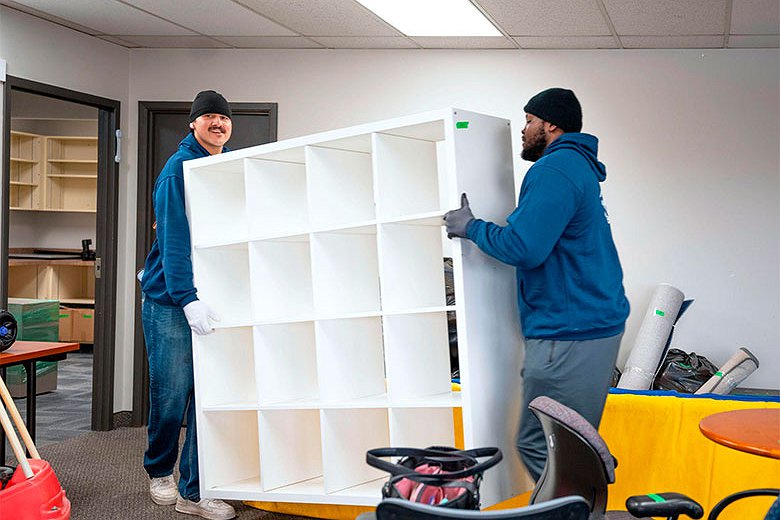
Large furniture is the category most commonly lost to landfill during moves — not because people don't want to donate it, but because arranging transport of a sofa to a charity is a significant logistical task on its own. Having a moving crew that can load and deliver it as part of the existing move removes this barrier entirely.
“In our experience, large furniture is the item people most want to donate, but least often manage to transport themselves. Once donation pickup is integrated directly into the moving route, the number of usable items that avoid landfill increases dramatically,” says Adam O’Keefe, moving industry expert.
Household Items and Kitchenware
Dishes, pots and pans, cutlery, small kitchen appliances, lamps, mirrors, picture frames, decorative items, and linens are consistently in demand. These items are easy to donate — they fit in boxes, require no special handling, and are accepted by virtually all general-purpose donation centres. Appliances must be in working condition. Linens should be clean.
Clothing and Personal Items
Clothing donations are accepted year-round, with Calgary charities serving populations that rely heavily on donated clothing — particularly during winter months. Children's clothing, winter outerwear, work attire, and footwear in good condition are among the highest-priority items at most organizations. The Salvation Army, WINS, and Goodwill Industries all have active clothing intake programs. Items should be clean and free of significant damage.
Electronics
Working electronics — laptops, tablets, phones, small televisions, and household electronics — are accepted by some organizations. Non-working items are generally not accepted for donation, though separate electronics recycling options are available in Calgary through the City's household hazardous waste program. When in doubt, the moving crew can advise on which items are likely to be accepted based on partner criteria.
What Can't Be Donated
Items that are not accepted by Calgary charities typically include: mattresses (due to hygiene regulations), large appliances without prior arrangement, items with significant mould or pest damage, medications or personal care products, and items in non-functional condition. Understanding these limits before move day prevents delays on the day itself.
If you're planning a move out of Calgary, the same approach applies — our long-distance movers can coordinate donation drop-offs before you leave the city.How Calgary Movers ABPro Handles Donation Coordination
Calgary Movers ABPro works with eight established Calgary charities as confirmed donation partners. The coordination model is straightforward: customers flag items for donation at the time of booking or on move day; the crew assesses what can be accepted based on each partner's current criteria; and the drop-off is coordinated as part of the existing move. No separate trip. No additional effort from the customer.
This works because the company has pre-established relationships with each partner organization, meaning it knows each location's current intake capacity, accepted item categories, and drop-off logistics. A customer doesn't need to research which charity accepts what. The crew handles the matching.
Whether you're planning a full house move or a smaller apartment relocation, our residential moving services in Calgary include donation coordination as a standard part of the process.Evening Availability for Donation Coordination
Calgary Movers ABPro offers evening moves starting from 5 PM. For customers who work standard hours, this means move day doesn't have to be a day off. Evening availability also applies to moves that include donation coordination — the process works the same regardless of the time of day.
Serving Northwest, Southwest, and Southeast Calgary
The company serves customers across Calgary's residential neighbourhoods — northwest Calgary communities including Tuscany, Rocky Ridge, and Varsity; southwest Calgary areas including Evergreen, Shawnessy, and Signal Hill; and southeast Calgary communities including Auburn Bay, McKenzie Towne, and Mahogany. Donation drop-offs are coordinated within these service areas as part of the move.
WINS — Women in Need Society

WINS operates thrift stores across Calgary and uses the proceeds to fund programs that support women and families experiencing poverty, crisis, or domestic violence. They are one of Calgary's oldest and largest donation-based social enterprises, distributing affordable goods directly to families in need through their store network.
WINS is particularly focused on household goods, furniture, and clothing — items that help families reestablish stable home environments after crises.
What they accept: Furniture, clothing, housewares, kitchenware, linens, small appliances.
Alpha House Calgary

Alpha House provides safe shelter and crisis support for individuals in Calgary affected by addiction and homelessness. They operate multiple facilities, including a 24-hour detox centre and transitional housing programs. Donated goods — particularly furniture and household items — are used to furnish transitional housing units for individuals moving from shelter to independent living.
Alpha House's transitional housing program is one of the most direct use cases for donated furniture in Calgary: items go from a donor's home to a person's first stable living space.
What they accept: Furniture, bedding, household items, clothing.
Calgary Drop-In Centre

The Calgary Drop-In Centre is one of Canada's largest emergency shelters, serving over 1,000 individuals daily across housing, food, health, and employment support programs. They have been operating in Calgary since 1961. Donated clothing and personal items are distributed directly to guests at the shelter and residents in its transitional housing programs.
The Drop-In Centre's scale means donated clothing and personal items reach people in acute need quickly — often within days of the donation being processed.
What they accept: Clothing, footwear, bedding, personal care items, small household goods.
Inn from the Cold

I nn from the Cold focuses specifically on Calgary families experiencing homelessness — parents and children who have lost housing. Their programs include emergency family shelter, transitional housing, and long-term housing support. Donated furniture and household goods are used to furnish family units as families transition from shelter to permanent or semi-permanent housing.
The need for functional household items — beds, tables, chairs, basic kitchenware — is particularly acute for families setting up a new home after a period of homelessness. Donated items from a move can directly equip a family's new living space.
What they accept: Furniture, household items, children's items, clothing, and kitchenware.
Easter Seals Canada — Alberta

Easter Seals Canada supports Canadians living with physical disabilities through equipment funding, accessible camp programs, and community support initiatives. In Alberta, proceeds from donated goods help fund adaptive equipment and access to programs for individuals with disabilities who could not otherwise afford them.
Easter Seals operates a donation model in which donated goods fund programs rather than being distributed directly, making the quality and resale value of donated items particularly relevant.
What they accept: Furniture, clothing, household goods, electronics in working condition.
The Salvation Army

The Salvation Army operates one of the broadest social service networks in Calgary, including emergency food assistance, shelter, addiction recovery programs, and community family services. Their thrift stores — where donated goods are sold at affordable prices — generate a significant portion of the funding for these programs. The Salvation Army is among Calgary's highest-volume donation centres and accepts a wide range of items.
Because The Salvation Army's programs span food, shelter, and recovery services, the funding generated by donated goods supports multiple layers of community need simultaneously.
What they accept: Furniture, clothing, household goods, kitchenware, electronics, books, small appliances.
The Mustard Seed (The Seed)

The Mustard Seed serves Calgarians experiencing poverty and homelessness through food programs, emergency shelter, housing support, and addiction recovery services. They operate a community store where donated goods are made available to program participants at little or no cost, providing direct access to clothing and household items for people in active programs. The Mustard Seed's community store model means donated items go directly to people currently engaged in recovery or housing programs — providing stability and basic material comfort at a critical point in their lives. What they accept: Clothing, household items, kitchenware, linens, and small furniture.
Goodwill Industries of Alberta

Goodwill Industries of Alberta operates a network of retail donation stores across the province, using proceeds to fund employment training and job placement programs for Calgarians with barriers to employment — including people with disabilities, newcomers to Canada, and long-term unemployed individuals. Goodwill accepts one of the broadest ranges of donated items among Calgary charities.
Goodwill's employment mission means that donated goods support economic inclusion as well as immediate material need — the store's revenue creates jobs and job-training opportunities for people who face significant employment barriers.
What they accept: Furniture, clothing, household goods, electronics, books, sporting goods, small appliances.
How the Donation Process Works With Calgary Movers ABPro — Step by Step
The practical process for customers who want to combine a move with donation coordination is straightforward. The key is identifying donation items before move day rather than on the day itself — this allows the crew to plan loading and routing efficiently.
- Identify items for donation before booking or on move day. Walk through the home and physically separate anything you want to donate. The more clearly flagged, the faster the process on move day. If you're unsure whether an item will be accepted, note it — the crew can advise.
- Mention donation items when booking your move. This allows the team to factor the drop-off into the routing plan. For larger furniture donations, advance notice allows the crew to confirm the charity partner's current intake capacity.
- The crew assesses items on move day. Based on condition and current partner intake criteria, the crew will confirm which items can be accepted and by which organization. This step happens on-site — no prior research required from the customer.
- Donation drop-off is included in the move. Items are loaded and delivered to the relevant charity partner as part of the overall move. The customer does not need to arrange a separate trip, contact the charity independently, or be present at the drop-off location.
For moves in northwest, southwest, and southeast Calgary, this process applies regardless of the time of day — including evening moves scheduled from 5 PM onward.
Planning a Move in Calgary? Let Us Handle the Donation Drop-Off.
Calgary Movers ABPro coordinates donation drop-offs with eight trusted Calgary charities as a built-in part of every move. No extra trips. No extra effort. Just tell us what you'd like to donate when you book.
We serve northwest, southwest, and southeast Calgary — including evening moves from 5 PM onward.
Frequently Asked Questions
Can I donate items the same day as my move?
Yes. Donation coordination is built into the move process, not added as a separate service. Items are assessed on move day, and the drop-off is handled as part of the route. The only requirement is that items are identified and separated before the crew arrives.
What if I'm not sure whether an item can be donated?
The moving crew can provide on-site advice based on each charity partner's current criteria. If an item can't be accepted by any of the eight partners — due to condition, size, or current intake limits — you'll know before it's loaded rather than after.
Do I need to contact the charity myself?
No. Calgary Movers ABPro coordinates directly with charity partners. The customer doesn't need to call ahead, confirm drop-off arrangements, or be present at the charity location.
What if I have a large amount of furniture to donate?
Large furniture donations — particularly multiple pieces — benefit from advance notice when booking. This allows the team to plan truck space and confirm intake capacity with the relevant charity partner before move day. The process is the same; the planning is simply more detailed.