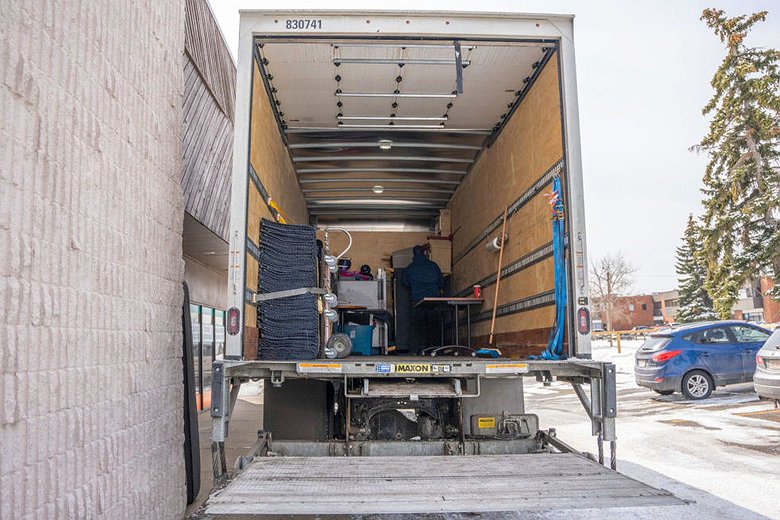
Every move with a Calgary moving company follows the same sequence: the crew arrives and checks in, walks through the home with you, protects floors and doorways, loads the truck, drives to the new address, unloads and reassembles furniture, then finishes with a final walkthrough and the invoice. A typical one-bedroom apartment move takes about four to six hours, while a three-bedroom home usually takes around six to nine hours. Commercial moves follow the same basic steps but usually run after business hours so the office can keep working.
This guide walks through a sample apartment move, a house move, and an office move hour by hour, and shows where Calgary’s buildings, bylaws, and weather add time. Calgary Movers ABPro is a fully insured local moving company serving Northwest (NW), Southwest (SW), and Southeast (SE) Calgary and surrounding communities.
Key Takeaways
- Every moving day has seven stages. Most delays happen before loading starts, when access, parking, or packing is not ready.
- Condo moves are built around elevator bookings, which in Calgary buildings are commonly a three-hour block.
- A three-bedroom house usually takes six to nine hours, and a basement can add one to two more.
- Office moves typically run in the evening or over a weekend, with the floor plan and IT schedule set in advance.
- Street parking in busy neighbourhoods needs a City of Calgary permit, applied for well before move day.
- Chinooks, snow route parking bans, and short winter daylight all change the clock in Calgary.
The Seven Stages of Every Calgary Moving Day
Whether you are moving a studio or a 20-desk office, the day runs in the same order.
It starts with arrival and check-in, when the crew parks, checks in with the building, and pads the elevator. Your job is to have parking and elevator access ready before they pull up. Next comes the walkthrough: the crew reviews every room, and you point out fragile pieces and anything that can't be moved. During protection and prep, the crew lays floor runners, wraps furniture, and takes apart beds and tables, so keep children and pets out of the work path.
Loading is the longest stage, and you only need to stay reachable for questions. While the truck is on the road, travel ahead and unlock the new home. At the new address, the crew unloads and reassembles furniture while you direct where large pieces go. The day ends with the final walkthrough, when you inspect the rooms, confirm the truck is empty, raise any concerns, and settle the invoice.
The stage that costs the most money never appears on that list: waiting. We call it dead time, meaning paid crew hours spent on anything other than moving your belongings. An elevator still in use, a truck with nowhere to park, and a room that isn't packed all create dead time. The hour-by-hour examples below show where it tends to appear.
The Night Before: Hour Zero
Most moving days are decided the evening before. Use it to remove every reason the crew might wait.
Confirm the crew’s arrival window and your elevator booking at both buildings. Many Calgary condos also require a certificate of insurance (a document proving the mover carries liability insurance) naming the condo corporation, so check that it has reached the property manager.
People also search
If the truck needs street parking, the City of Calgary issues a Temporary No Parking Permit for personal moves only, along with a Street Use Permit, and you must apply for both in advance. The “No Parking” signs must be up at least 12 hours before your time slot, so this is not a same-day task. In winter, check whether the City has announced a snow route parking ban . Bans on streets marked with blue signs and a white snowflake can last up to 72 hours, and the City usually gives 1 to 2 days' notice.
Then look after the details inside the home. Salt the walkways at both addresses. Pack an essentials box that travels with you, not on the truck: medications, chargers, documents, keys, and a change of clothes. Set aside anything movers cannot carry, such as propane tanks, fuel, paint, and aerosols, because Transportation of Dangerous Goods rules restrict them. Our moving checklist covers the weeks leading up to this point.
Apartment and Condo Moving Day, Hour by Hour
Apartment and condo moves are the most scheduled of our residential moving services , because the building sets the clock. Calgary condo buildings commonly offer elevator bookings in three-hour blocks, such as 9 a.m. to 12 p.m. or 1 p.m. to 4 p.m., and some allow four hours.
Here is a sample one-bedroom condo move from the Beltline (SW) to Kensington (NW), with a morning elevator booking at the old building and an afternoon booking at the new one.
| Time | What happens |
|---|---|
| 8:45 a.m. | Crew arrives, checks in with the concierge or property manager, and pads the freight elevator |
| 9:00 a.m. | Walkthrough, then floor protection and bed disassembly |
| 9:15 to 11:15 a.m. | Loading inside the 9 a.m. to 12 p.m. elevator window |
| 11:15 to 11:30 a.m. | Truck sweep and final check of the empty unit |
| 11:30 a.m. to 12:15 p.m. | Drive across the city |
| 12:15 to 1:00 p.m. | Waiting for the 1 p.m. elevator window at the new building |
| 1:00 to 2:30 p.m. | Unloading, bed assembled first |
| 2:30 to 3:00 p.m. | Furniture placement, walkthrough, invoice |
Sample schedule based on a packed one-bedroom unit with booked freight elevators at both buildings. Actual times depend on your inventory and building rules.
8:45 to 9:15 a.m.: Check-In and Walkthrough
The crew’s first job is the building, not your furniture. They confirm the booking, hang protective pads in the freight elevator, and find the shortest route from the loading area to your door. Then comes the walkthrough, where you point out fragile pieces, anything staying behind, and items that need to be taken apart.
9:15 a.m. to 12:15 p.m.: Loading and the Drive
Loading runs against the elevator booking, so a packed, labelled unit matters more here than anywhere else. If the booking ends before the truck is full, the move stops until the building allows another slot. A cross-city drive in Calgary typically takes 30 to 60 minutes, depending on the route and traffic.
12:15 to 3:00 p.m.: The Gap, Then Unloading
Notice the 45-minute gap in the schedule. The truck has arrived, but the new building’s elevator is not available until 1 p.m. That is dead time, and it is the most common way a condo move runs longer than planned. When you book, ask both buildings whether they can line up their windows, or whether the new building has an earlier slot. Once unloading starts, assemble the bed first, then move large furniture, then boxes by room.
What Stretches a Condo Move
Refundable damage deposits in Calgary condo buildings are commonly $500, and premium buildings in areas such as Eau Claire, the Beltline, and East Village can charge $500 to $2,000. Always book the freight elevator rather than a passenger elevator. Some buildings limit moves to weekdays or block evenings entirely, and some loading docks have height limits that a standard moving truck cannot clear, so ask your property manager for the move policy in writing.
Evening moves are also an option. Our crews move residential customers from 5 p.m. into the evening, which works well for renters who cannot take a day off, as long as the building allows evening moves. Calgary’s daytime noise period runs until 10 p.m., and in late June the sun does not set until nearly 10 p.m., so summer evening moves have plenty of light. Our apartment moving and condo moving teams plan around both.
House Moving Day, Hour by Hour
House moves trade elevator windows for stairs, basements, garages, and distance. Here is a sample three-bedroom house move with a finished basement, from Tuscany (NW) to Mahogany (SE).
| Time | What happens |
|---|---|
| 8:00 a.m. | Crew arrives, walkthrough, floor runners and door protection |
| 8:30 a.m. to 12:00 p.m. | Main and upper floors: beds and tables taken apart, heavy furniture loaded first |
| 12:00 to 12:30 p.m. | Crew break, and a good moment for you to check progress |
| 12:30 to 2:30 p.m. | Basement, garage, and the final sweep of every room |
| 2:30 to 3:30 p.m. | Drive from the northwest to the southeast |
| 3:30 to 5:30 p.m. | Unloading room by room |
| 5:30 to 6:00 p.m. | Bed and table reassembly, walkthrough, invoice |
Sample schedule based on published Calgary averages of six to nine hours for a three-bedroom home, plus one to two hours for a finished basement.
8:00 to 8:30 a.m.: Protection Before Anything Moves
A house has more surfaces to protect than a condo: entry floors, stair rails, door frames, and in winter, a front step that may be icy. The crew lays runners, protects the path to the truck, and confirms the loading order with you. If your driveway is steep or the truck has to load from a back lane, they set the plan then.
8:30 a.m. to 2:30 p.m.: Floors, Then the Basement and Garage
Many crews start with the upper floors and work down. Every flight of stairs adds time, and published Calgary data puts it at 15 to 30 minutes per flight. The basement and garage come last and are where most houses surprise their owners: storage rooms, tools, and sports equipment that never made it onto the inventory. A packed basement staged near the stairs keeps this stage within its planned two hours.
The hour people lose on moving day is almost never the drive. It’s the 45 minutes a truck sits outside a condo because the elevator bookings don’t line up, or the crew waits at a house while the basement gets packed. Book both buildings together, have everything boxed before we arrive, and the day stays on schedule, says Adam O’Keefe, CEO of Calgary Movers ABPro.
2:30 to 3:30 p.m.: Crossing the City
Calgary covers more than 800 square kilometres, and a drive from Tuscany in the northwest to a new community in the far southeast can take 45 minutes or more in traffic. For a local move billed by the hour, that drive is on the clock, so a mid-day departure that avoids rush hour helps.
3:30 to 6:00 p.m.: Unloading Room by Room
Clear labels decide how fast this stage goes. Boxes marked with the destination room go straight there instead of piling up in the garage. Beds are rebuilt first so the first night works, and the crew places large furniture where you direct it. Our house moving crews finish with a room-by-room walkthrough before the invoice.
House-Specific Time Drivers
Winter changes a house move more than any other type. On the shortest day of the year, Calgary gets just under eight hours of daylight, and in late December the sun rises after 9:30 a.m., so a large house move can start and finish in the dark. Calgary’s Chinooks can raise temperatures by about 20°C within hours, which turns morning ice into afternoon slush and back again. Salt the paths, keep one door as the working door, and allow extra time for every trip outside.
Commercial Moving Day, Hour by Hour
Office moves follow the same seven stages, but the goal is different: the business should close at one address and open at the next without losing a working day. That is why our commercial moving services run in the evening, from 5 p.m. into the night, and over weekends. Many Calgary property managers also prefer large moves after business hours or on weekends, when elevators and loading docks are quieter.
The sample below follows a small office moving within Calgary on a weekday evening, with a completed floor plan, labelled workstations, and IT equipment packed in advance. Larger offices often move over a weekend or in phases.
5:00 to 6:00 p.m.: Check-In and the Floor Plan
Staff leave at 5 p.m., and the crew arrives as they go. Office buildings are stricter than condos about access. Many downtown Calgary office buildings ask for a certificate of insurance naming the landlord and property manager, a booked freight elevator and loading dock, and confirmed after-hours security access, so book these three to four weeks ahead. Once the crew has checked in and protected the dock and elevator, your office contact walks them through the destination floor plan, where every workstation has a number, and every department has a label.
6:00 to 9:30 p.m.: Loading and the Drive
From about 6 p.m., workstations, filing cabinets, and packed IT equipment are loaded by department, so they come off the truck in the same order at the other end. For a small office, loading typically wraps up around 9 p.m., followed by a short drive to the new address.
9:30 p.m. to 1:00 a.m.: Placement, Reassembly, and Walkthrough
Desks and workstations go back together in the positions shown on the floor plan. This is where preparation pays off most: a floor plan lets the crew place each item once, rather than stacking everything in a boardroom to sort later. The evening ends with a walkthrough with your office contact, and when staff return at 8 a.m., your IT team completes reconnection and testing.
What Your Business Needs Ready Before 5 p.m.
- A destination floor plan with numbered workstations and department labels.
- IT equipment shut down, with wiring photographed and cables bagged per desk. Confirm shutdown and restart times with your IT team or provider.
- Files packed in labelled crates, and personal items cleared from desks.
- Building confirmations in writing: elevator, dock, security access, and the certificate of insurance.
- One decision-maker available at each address for the evening.
What Changes the Clock in Calgary
A few local conditions can turn a planned move into a longer one, no matter the move type.
- Chinooks. They are most common from November to March and can turn a morning from ice to bare pavement by noon, or the reverse.
- Snow route parking bans. When a ban is in effect, the truck cannot park on designated snow routes, so check the City’s announcements before move day.
- Stampede week. The Calgary Stampede runs July 3 to 12, 2026, and the parade and road closures slow moves in downtown, Beltline, Victoria Park, and East Village.
- Month-end. Elevator bookings, crews, and street space fill fastest in the last days of the month, when most leases turn over.
- Stairs and long carries. Every flight and every extra metre between the truck and your door adds time to each trip.
End of the Day: Walkthrough, Invoice, and Peace of Mind
Before the crew leaves, walk every room at the new address, check that the truck is empty, and look over your furniture. If something looks damaged, point it out while the crew is still there.
Our crews are fully insured and provide full liability coverage, which means you are protected if something is damaged during the move. We quote with no hidden fees, so every charge on the invoice is one we explained before moving day. For a closer look at how local moves are priced, read how much movers cost in Calgary .
Two services often help at the end of the day. If your new place isn't ready, our temperature-controlled storage facilities can hold your belongings until it is. And if you set aside furniture, household items, or clothing you no longer need, we can collect them and donate them to Calgary charity partners such as WINS, the Calgary Drop-In Centre, and Inn from the Cold at no extra cost.
Conclusion: How to Keep Your Calgary Moving Day on Schedule
A Calgary moving day is not a single long job. It is seven short stages, and each one either runs on time or creates dead time. The type of move decides where the pressure sits. A condo move lives inside its elevator bookings, so the most valuable thing you can do is line up the windows at both buildings and have every box packed before the first one opens. A house move depends on stairs, the basement, the garage, and the drive across the city, which is why a three-bedroom home with a basement can fill a full working day. An office move shifts the whole schedule into the evening or a weekend, and succeeds or stalls on the floor plan, the labels, and the IT timing.
Calgary adds its own layer on top of that. Parking permits need to be arranged days ahead, snow route bans and Chinook ice can change conditions overnight, and Stampede week and month-end compress everyone’s schedule at once. That's why you should plan the night before as carefully as the day itself.
The right Calgary moving company plans those details with you before the truck arrives. Calgary Movers ABPro provides residential moving services for apartments, condos, and houses, and commercial moving services for offices, across NW, SW, and SE Calgary, as well as communities such as Airdrie, Cochrane, Okotoks, and Chestermere. Evening moves start from 5 p.m. for both homes and businesses. Send us both addresses, your home or office size, and access details at each end to get your free estimate . Book online and save 10 percent.
Frequently Asked Questions
How long does moving day take in Calgary?
Published 2025 data from Calgary local moves puts a studio at three to five hours, a one-bedroom apartment at four to six, a two-bedroom home at five to seven, and a three-bedroom home at six to nine. A basement typically adds one to two hours, and gaps between elevator bookings add more.
What time do movers usually start?
Condo and apartment moves start at the building’s elevator booking, usually a morning or afternoon three-hour block. House moves are usually planned for the morning so loading and unloading fit in one day, and office moves typically start after business hours.
Can movers work in the evening in Calgary?
Yes. Calgary Movers ABPro crews move homes and businesses from 5 p.m. into the evening. Check your building’s move policy first, because some condos do not allow evening moves, and keep in mind that Calgary’s daytime noise period ends at 10 p.m.
Do I need a parking permit for a moving truck in Calgary?
If the truck needs street space in a busy or time-limited area, yes. The City issues a Temporary No Parking Permit for personal moves, along with a Street Use Permit, and you must post the signs at least 12 hours before your move. Apply well ahead of your date.
Do I need to be home during the move?
You or someone you trust should be there for the walkthrough at the start, reachable during loading, and present at the new address to direct furniture placement and do the final walkthrough.
How long does an office move take?
A small office can often move in one evening or one day. Larger floors or offices with several departments usually move over a weekend or in phases, with the floor plan and IT schedule set weeks in advance.
What happens if it snows on moving day?
The move usually goes ahead with extra time built in. Salt the paths, protect the floors, and check whether the City has called a snow route parking ban that affects where the truck can park.