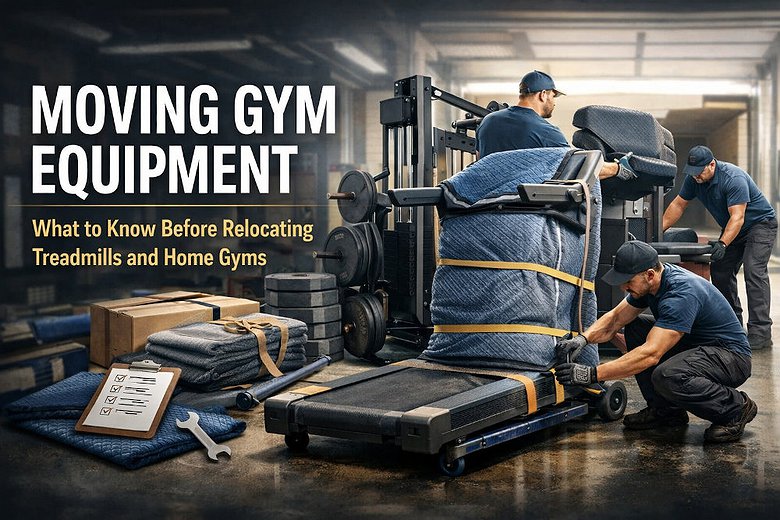
Moving gym equipment is not the same as moving furniture. Treadmills, weight machines, squat racks, and cable systems are heavy, awkward to handle, and often contain sensitive mechanical or electronic components. One wrong move can lead to damaged equipment, scratched floors, or even serious injury.
Explore further
Many homeowners and fitness businesses underestimate what’s involved in relocating workout equipment. Tight stairwells, elevators, condo rules, uneven weight distribution, and vibration during transport all add complexity to the process. What looks manageable at first often becomes stressful and expensive without proper preparation.
This guide explains what you should know before moving gym and exercise equipment — from common mistakes and safety considerations to planning tips for home gyms and commercial fitness spaces. Whether you’re relocating a single treadmill or an entire workout setup, understanding the process helps you make informed decisions and avoid costly surprises.
Why Moving Gym Equipment Is More Complex Than It Looks
Gym equipment is designed to stay in one place. Unlike sofas or tables, most fitness machines combine significant weight, awkward dimensions, and mechanical precision. Even compact equipment can become difficult to move once you factor in stairs, tight doorways, and limited clearance.
Many machines contain internal components such as belts, pulleys, cables, guide rails, and electronic consoles. These parts are built to operate under controlled conditions, not to absorb sudden shifts, tilting, or vibration during transport. Improper lifting or positioning can place stress on frames and connection points, increasing the risk of misalignment or damage.
Weight distribution is another major challenge. Treadmills, racks, and selectorized machines are often heavier on one side, making them unstable if moved without proper planning. Combined with smooth floors or narrow staircases, this creates a real risk for both property damage and personal injury.
This complexity is why moving gym equipment requires more preparation, protection, and control than a standard household move.
Common Mistakes When Moving Workout Equipment
One of the biggest mistakes people make is treating gym equipment like regular furniture. Workout machines are often moved without proper planning, which increases the risk of damage, delays, and injury.
People also search
A common issue is skipping partial disassembly. Many treadmills, racks, and multi-station machines are designed to be broken down into smaller sections for safe transport. Trying to move them fully assembled puts unnecessary stress on frames and connection points.
Another frequent mistake is failing to protect floors and walls. Heavy equipment dragged or rolled without floor protection mats can easily scratch hardwood, damage tile, or dent walls and door frames — especially in condos and stairwells.
Improper lifting techniques are also a serious concern. Gym equipment is awkwardly balanced, and lifting it without straps, dollies, or coordinated movement can lead to strained backs, crushed fingers, or dropped machines.
Finally, people often underestimate access challenges. Narrow hallways, low ceilings, elevators, and building rules can quickly turn a simple move into a complicated logistical problem when they are not accounted for in advance.
How to Move Gym Equipment Safely
Safe gym equipment relocation starts with preparation. Before moving day, it’s important to assess the size, weight, and structure of each machine. This helps determine whether partial disassembly is required and what tools or support will be needed.
Disassembly should always follow manufacturer guidelines when possible. Removing consoles, handles, weight stacks, or detachable frames reduces strain on the equipment and makes it safer to transport. Small components and hardware should be grouped and labelled to avoid confusion during reassembly.
Protection is equally critical. Floors, stairs, and door frames should be covered with floor protection mats and padding before moving heavy equipment. Machines themselves should be wrapped with padded blankets and secured to prevent shifting during transport.
During lifting and movement, controlled handling is essential. Equipment should be kept balanced, supported at multiple points, and moved slowly — especially on stairs or uneven surfaces. Sudden tilting or dragging increases the risk of damage to both the equipment and the property.
After placement at the new location, equipment should be carefully positioned and reassembled. A visual inspection of electronic components and a mechanical stability check help confirm that the machine is securely assembled and safely positioned before use.
Home Gym vs Commercial Gym Relocation
While the basic principles of moving gym equipment remain the same, home gym moves and commercial gym relocations differ significantly in scale and complexity.
Home gym equipment moves
Home gym moves usually involve fewer machines, but access is often more challenging. Basements, narrow staircases, low ceilings, and tight turns are common obstacles. Equipment may need to be carried up or down multiple flights of stairs, increasing the importance of proper disassembly and floor protection.
In residential settings, protecting finished surfaces is critical. Scratched floors, damaged walls, or cracked tiles can quickly become costly repairs if equipment is moved without adequate precautions.
Commercial gym equipment relocation
Commercial gym moves are more complex and time-sensitive. They often involve:
- Large volumes of heavy, commercial-grade equipment
- Strict timelines to reduce operational downtime
- Coordination with property managers and building staff
- Elevator bookings, loading docks, and access windows
- Compliance with building and safety regulations
Unlike home moves, commercial relocations require detailed planning and sequencing. Equipment is often moved in stages to maintain order and reduce disruption. Clear labeling, documentation, and controlled placement are essential to avoid delays and confusion during setup.
Understanding these differences helps determine the level of planning and support required for a successful gym equipment move.
When to Hire Professional Gym Equipment Movers
In some situations, moving gym equipment on your own may be manageable. However, there are clear signs that professional support is the safer option.
Hiring experienced movers is recommended when equipment is particularly heavy, expensive, or mechanically complex. Machines with motors, electronics, or integrated weight systems are more vulnerable to damage if handled incorrectly.
Professional movers are also helpful when access is limited. Stairs, elevators, tight hallways, or strict building rules can significantly complicate a move and increase risk without proper planning and tools.
Time constraints are another factor. Commercial gyms, studios, and shared fitness spaces often operate on tight schedules. Professional gym equipment movers can coordinate logistics efficiently, helping reduce downtime and avoid unnecessary delays.
If you’re planning a relocation in Calgary and want to minimize risk, working with professional gym equipment movers in Calgary can help ensure equipment is handled safely, property is protected, and the move stays on schedule.
Final Thoughts
Moving gym and exercise equipment requires more than physical effort. Weight, mechanical complexity, electronics, and access conditions all play a role in how safely equipment can be relocated.
Understanding the challenges involved — from disassembly and floor protection to controlled handling and reassembly — helps reduce risk and prevent costly mistakes. Whether you’re relocating a small home gym or planning a larger commercial move, preparation is key.
Taking the time to plan properly and knowing when to involve professional support can make the difference between a smooth relocation and an avoidable problem. With the right approach, gym equipment can be moved safely, efficiently, and without unnecessary stress.
FAQs – Moving Gym & Exercise Equipment
Is it safe to move gym equipment yourself?
In some cases, yes — but only for small or lightweight equipment. Larger machines like treadmills, squat racks, and cable systems are heavy and awkward to handle. Without proper tools and lifting techniques, there is a high risk of injury or damage to the equipment and property.
What gym equipment usually needs to be disassembled before moving?
Most treadmills, multi-station machines, power racks, and selectorized weight machines require partial disassembly. This helps reduce weight, prevent frame stress, and protect electronic and mechanical components during transport.
How do you protect floors and walls when moving gym equipment?
Proper protection includes floor protection mats, padded moving blankets, corner guards, and controlled lifting techniques. This is especially important in condos, basements, and stairwells where surfaces are easily damaged.
Can moving gym equipment damage electronics?
Yes. Consoles, sensors, wiring, and control panels can be damaged by vibration, improper lifting, or pressure during transport. That’s why equipment should be stabilized, padded, and handled carefully throughout the move.
Is moving gym equipment different in condos or apartments?
Yes. Condo and apartment moves often involve elevators, narrow hallways, booking restrictions, and strict building rules. Planning access times and protecting common areas is essential to avoid delays or fines.
How long does it take to move gym equipment?
Timing depends on the type and quantity of equipment, access conditions, and whether disassembly is required. A single home gym may take a few hours, while a commercial gym relocation can take a full day or longer.
When should I hire professional gym equipment movers?
Professional movers are recommended when equipment is heavy, expensive, electronically complex, or difficult to access. Hiring experienced gym equipment movers reduces risk and helps ensure equipment arrives safely and ready for use.